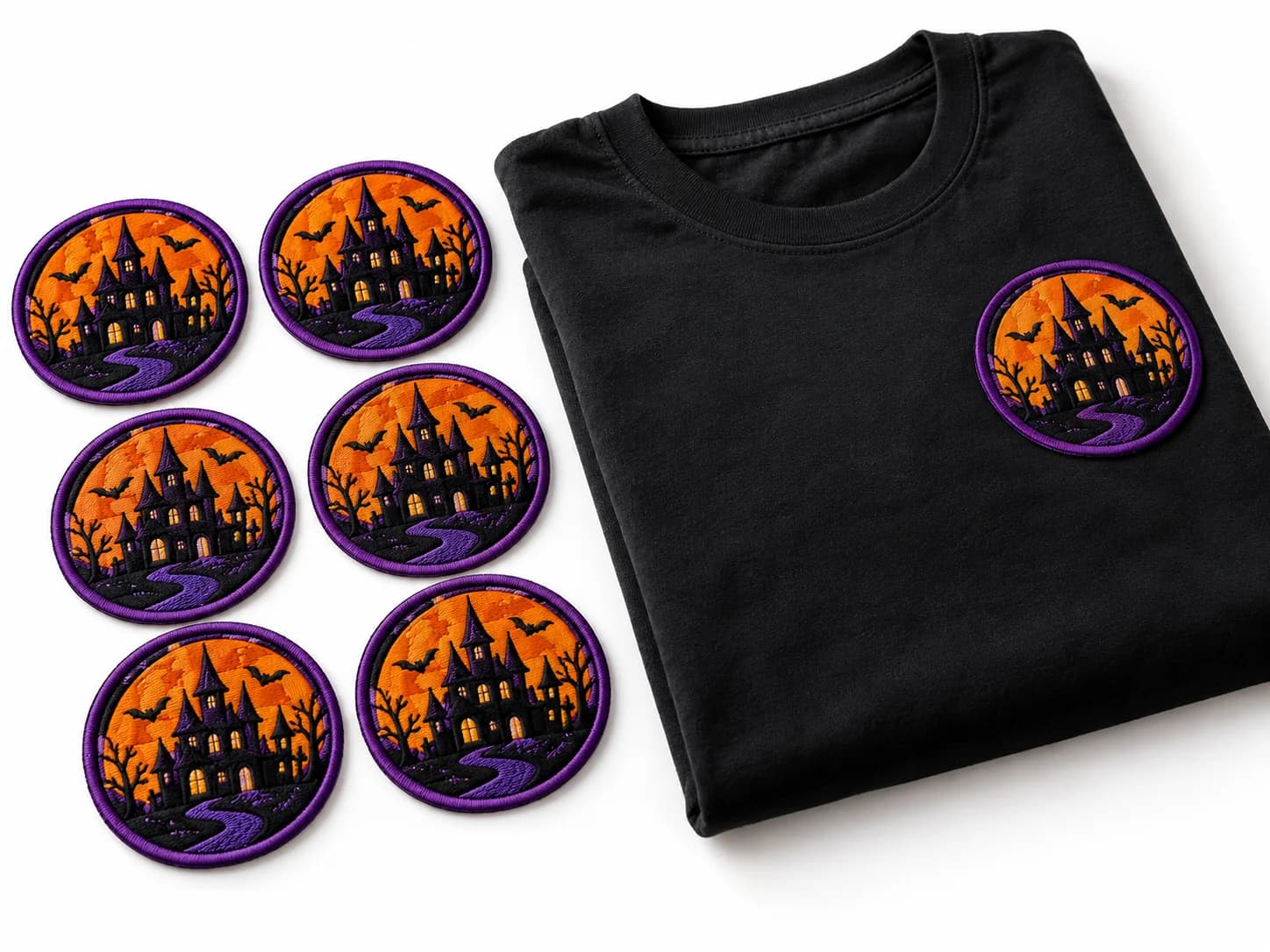
Two questions decide most Halloween patch orders: where will the patch be worn, and when do you need it? The answers often shape the patch type and backing more than the artwork does. Below are ideas for costume groups, haunted attractions, schools, and shops, each matched to a patch type that fits. If you'd rather start from the product, see our custom Halloween patches.
What makes a good Halloween patch design?
A good Halloween patch has one bold focal shape, strong color contrast, and lettering big enough to read. Small text and thin lines tend to blur in thread, so simpler art usually looks better stitched. People wear Halloween patches on costumes, hoodies, and denim jackets. Haunted attractions, schools, and shops use them as staff gear, event keepsakes, and October merch.
What are good Halloween patch ideas for costume groups and cosplay?
Group costumes work best when everyone wears one matching detail. A patch gives a mixed crowd something in common without matching outfits.
- A coven or crew emblem. A moon, crow, or cauldron with a short group name works well. Bold, flat shapes like these suit embroidery.
- Rank or role badges. Think "Head Witch" or "Graveyard Shift" on a sleeve. Keep the words short, and keep letters taller than roughly 0.2 inches so they stay readable.
- Original monster mascots. A cartoon ghoul or a stitched-up creature you drew yourself works well, as long as the art is your own.
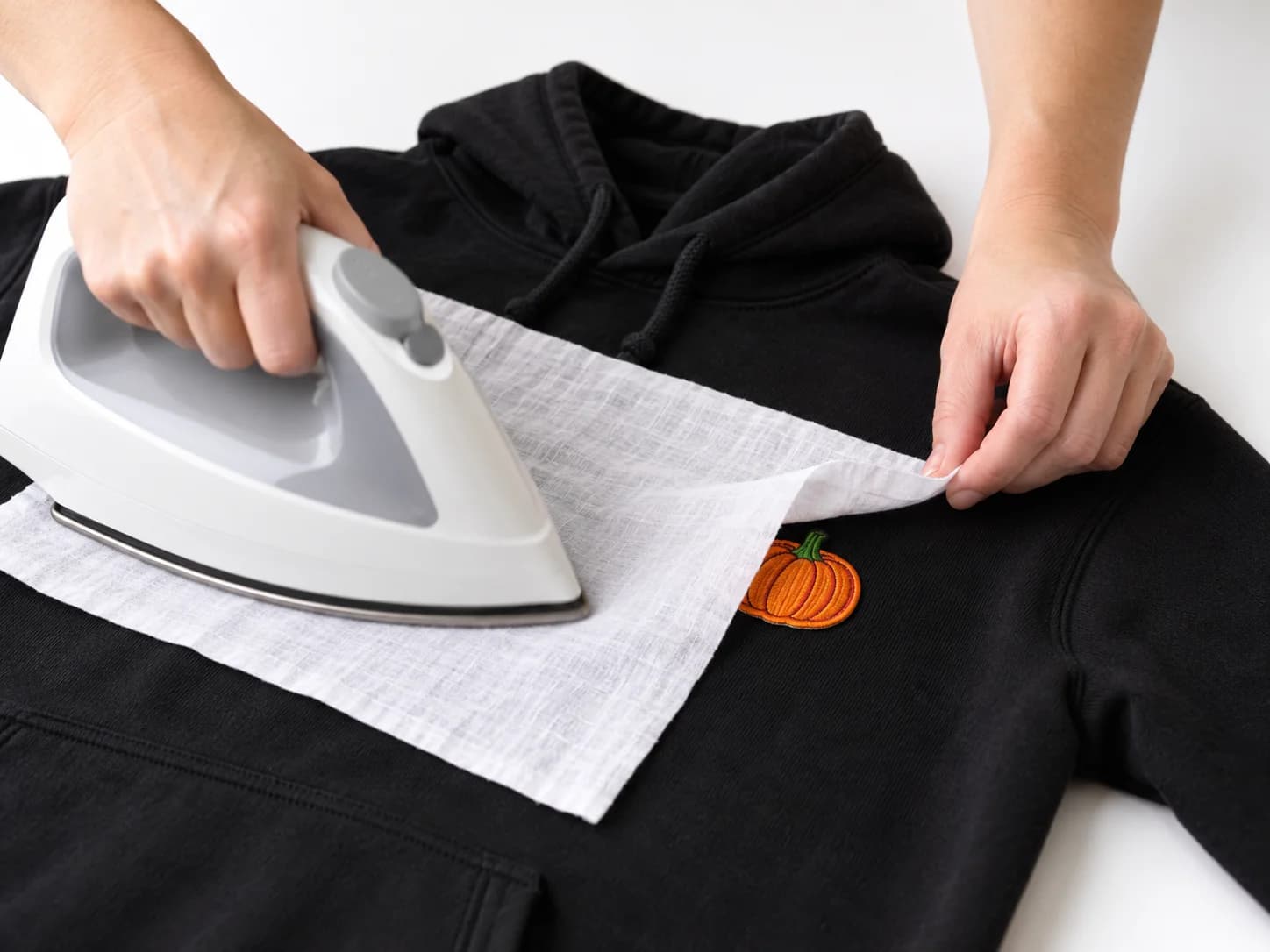
For costumes you'll wear once or twice, Halloween iron-on patches save the most time. Check the fabric label before you press. Thin costume fabric is the usual trouble spot, and sew-on backing may be the safer choice there.
What patches work for haunted attractions and escape rooms?
Staff patches do two jobs here. They show guests who works the attraction, and they double as a souvenir.
- Staff uniform patches. A haunted-house logo on a black work shirt keeps the whole crew looking matched. Sew-on backing is usually the safer pick for uniforms that get washed all season.
- Role patches. "Actor," "Guide," or "Security" patches help guests find the right person in the dark.
- VIP or ticket-tier patches. A small patch given with a premium ticket works as a keepsake guests wear home.
- Escape-room completion patches. One patch per room gives repeat visitors something to collect on a jacket.
Glow-in-the-dark thread is available on some patch types, so it's worth raising early if your design has glowing eyes or outlines.
Which patches suit schools, PTAs, and trick-or-treat events?
Schools and community groups usually need many patches in one design, often for volunteers. A PTA running a trunk or treat, for example, might want forty matching volunteer patches so parents are easy to spot in the dark.
- Volunteer badges. One simple pumpkin or ghost with the event name lets families spot helpers quickly.
- Participation patches for kids. A small, friendly patch handed out at the door lasts longer than a paper sticker, since kids can put it on a backpack.
- Class or club emblems. A varsity-style initial in chenille patches looks right on a jacket. Stick to one or two big letters.
There's no minimum order, so a small volunteer crew and a whole school are both fine. Send the headcount you expect and we'll quote it.
What Halloween merch can shops and bars sell in October?
An October merch drop doesn't need a full clothing line. A patch is a small, low-risk item that customers can add to something they already own.
- A limited-run seasonal design. A bar logo turned into a skull, or a shop mascot in costume, gives regulars a reason to visit.
- A counter add-on. Priced low and kept by the register, a patch is an easy impulse buy.
- Glossy "slime" or drip designs. PVC patches are molded, which gives dripping effects a smooth, shiny surface.
- Hoodie add-ons. Sell a plain black hoodie next to a rack of iron-on patches and let customers choose.
Choose a design that still works in November. If the patch only makes sense on October 31, you'll be stuck with leftovers.
Which horror and alt-fashion patches sell all year?
Horror patches don't depend on the calendar. Skulls, gothic lettering, moths, and graveyard scenes sell in March, too.
- Battle-jacket skulls and gothic lettering. Embroidered patches handle bold skull shapes well, and the raised stitching reads clearly on denim.
- Fine-detail illustrations. Woven patches are worth a look for small details like fangs or cobweb lines.
- Reusable bag and gear patches. Hook-and-loop (Velcro-style) patches let you swap a design on a backpack or vest without sewing.
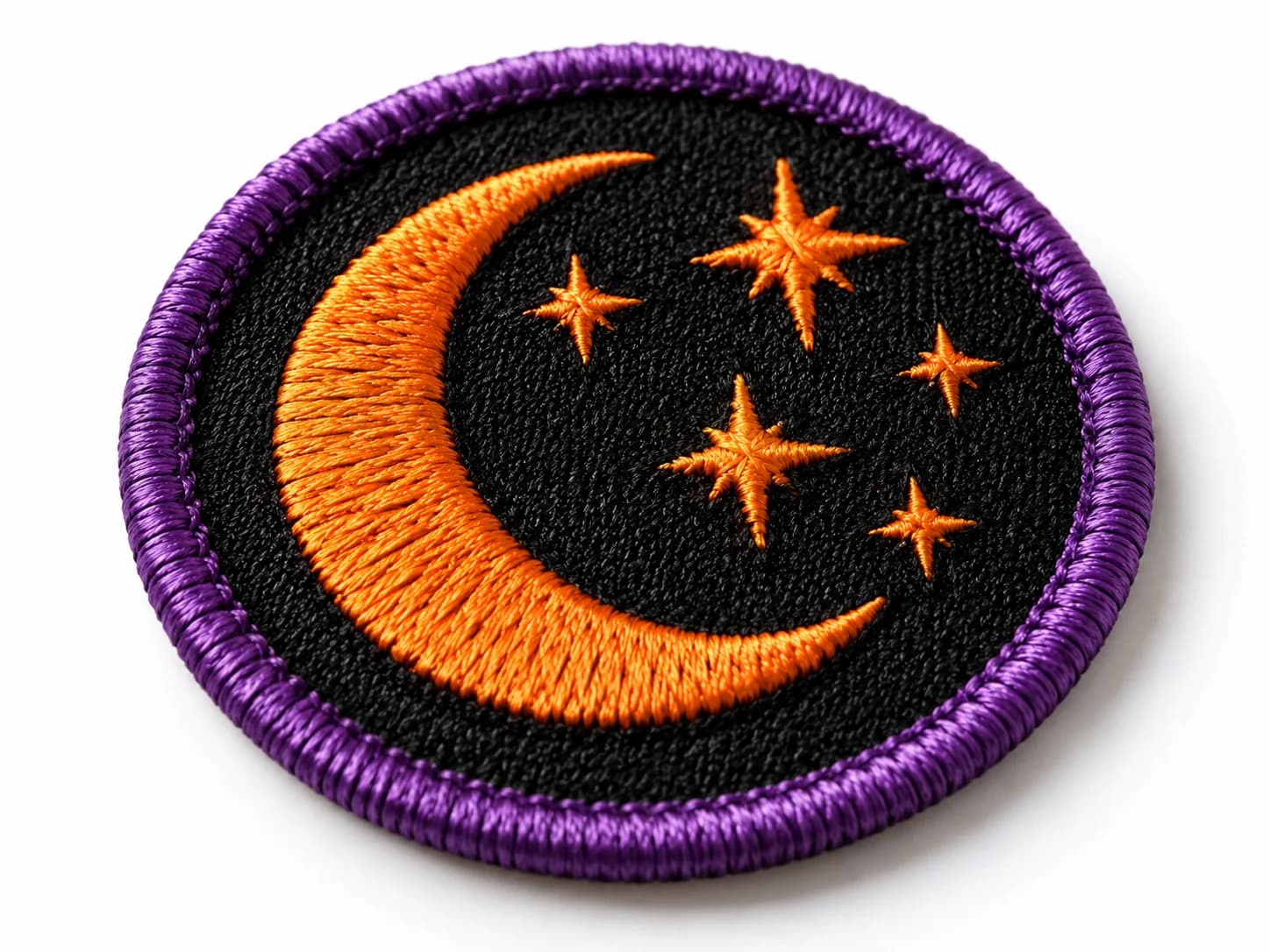
A tip from my years on the production side: one thing I see often is detail getting removed, not added. Thread fills space, so crowded artwork usually looks muddier stitched than it does on screen. If you're torn between two versions, pick the one with fewer tiny elements. The free digital proof will show you any problem before anything is made.
How do I order Halloween patches in time?
Work backward from your event date. Shipping is free worldwide, but it still takes time. Before that comes production, which runs 7 to 14 business days after you approve your proof. Before that is the free digital proof, which arrives in 24 to 48 hours.
The part you control is how quickly you review the proof. Send your artwork, size, quantity, and event date with your request. If the date is tight, ask for rush production. Rush timing depends on the patch type, so we'll tell you whether it fits. Nothing goes into production until you approve the proof. For patch types and backing options, see the Halloween patches page.